Study in Europe from Africa: Countries, Costs & Visas
Public universities in Germany charge free tuition and Poland's charge €2,000–6,500 per year, against £11,400–38,000 per year in the UK. We cover twelve European destinations for students from nine African countries, with living costs from €500–600 per month. The catch is proof of funds: Germany asks €11,904 per year blocked before the visa is issued.
Why study in Europe instead of the UK, US or Canada?
Cost decides most cases. German public universities charge free tuition for a bachelor’s and free for a consecutive master’s, leaving the semester fee of €100–400 per semester. Public tuition runs €178–2,902 per year in France and €200–4,200 per year in Italy. A UK bachelor’s costs £11,400–38,000 per year, and UK medicine £45,000–70,000 per year.
The second reason is the right to stay on. Germany’s §20 job-seeker residence permit runs 18 months, Spain’s job-search permit 24, and Ireland gives master’s graduates 24 against 12 after a bachelor’s. Every destination we cover publishes a post-study route except a Cyprus bachelor’s, which has none. Term-time work is allowed almost everywhere, from 30 hours/week in Hungary to 20 hours/week maximum in Italy.
You would not be the first: France hosts 110,607 African students, 24.9% of its international intake, and Germany 20,416. The trade-off is entry — consulates examine funds and intent closely, and several countries teach bachelor’s degrees in the local language.
Which European country suits which student?
Sort the twelve by public tuition. Lowest are Germany at free, France at €178–2,902 per year and Italy at €200–4,200 per year, with Austria charging a flat €726.72 per semester for any degree, medicine included. In the middle sit Poland at €2,000–6,500 per year, Hungary at €3,000–8,000 per year and Cyprus at €6,834 per year. Highest are Malta at €8,500–10,800 per year, Ireland at €9,850–27,000 per year and the UK.
Living costs often reverse that order: Hungary runs €500–600 per month and France €600–800 per month, against Ireland at €1,200–1,800 per month, Austria at €1,250–1,500 per month and the UK at £1,171–1,529 per month. A low fee in an expensive city can cost more over three years than a mid-range fee in a cheap one, so compare tuition, living costs, visa fee and proof of funds as one number.
Visa fees spread as widely, from €50 for Italy and €75 for Germany to £558 for the UK. Start with a destination hub: study in Germany, study in Ireland or study in Poland.
Cheapest ways to study in Europe
Three routes stand out on total cost. Germany charges free public tuition, so your outlay is the semester fee of €100–400 per semester plus €850–1,200 per month to live — but you must block €11,904 per year in a Sperrkonto first, which is the wall most applicants hit. Hungary pairs tuition of €3,000–8,000 per year with the lowest living costs of the destinations we quote in euros, €500–600 per month, and publishes no fixed proof-of-funds amount.
Poland is the third, with tuition at €2,000–6,500 per year and the most liberal work rule in Europe: no cap at all for full-time students at qualifying institutions. The catch is the front end — Poland’s visa fee is €200, among the highest of the twelve, and you must show PLN 17,650. Italy is cheaper still, because its fee is banded by family income. Our cheapest places to study in Europe comparison ranks them side by side.
Can you study in Europe in English?
Ireland and Malta teach and examine almost everything in English. Hungary and Poland run large English-taught catalogues, including English-medium medicine at US$16,900–20,900 per year and €14,900–17,000 per year respectively — well below the £45,000–70,000 per year a UK medical school charges. Cyprus teaches in English at its private universities, priced at €8,970–11,520 per year, and at master’s level,; its public bachelor’s degrees are largely in Greek.
Germany, France, Spain, Italy and Austria put their English-taught study at master’s level. For an all-English bachelor’s starting in 2027, the realistic shortlist is Ireland, Malta, Hungary, Poland and private Cyprus.
Test requirements are separate from teaching language. Published floors run from IELTS 5.5 in Cyprus, Hungary, Poland and Spain to 6 in Germany, Ireland, Malta and Italy, and 6.5 in Türkiye and France. Coming from an anglophone country is not an automatic waiver; universities decide individually, usually on English-taught school grades or a Medium of Instruction letter. See IELTS alternatives and waivers.
Scholarships for African students in Europe
Full funding exists, but it is competitive and eligibility is set country by country. The schemes we track are Stipendium Hungaricum for Hungary, DAAD for Germany, Chevening and Commonwealth for the UK, Banach-NAWA for Poland, Türkiye Bursları, Eiffel for France, the Italian Government scheme, OeAD for Austria, MAEC-AECID for Spain, the Government of Ireland scholarships, and Erasmus Mundus joint master’s degrees across the EU.
Check your nationality against a scheme before you build a plan around it — Stipendium Hungaricum, Commonwealth and OeAD all exclude or restrict some of our nine origin countries. No genuine scheme charges a fee for a nomination. Our scholarships hub lists each one by destination and nationality.
How to choose a country and apply
Work through it in this order for the 2027/28 intake.
- Set the budget as one annual figure: tuition, living costs, insurance, visa fee and the sum you must prove. Germany’s €11,904 per year and Italy’s €10,179.85 per year outweigh the fee itself.
- Fix the language. An all-English bachelor’s narrows the list to five countries; German, French, Spanish or Italian at B2 opens the cheapest public tuition in Europe.
- Check the post-study route. Spain gives 24 months, Germany 18, and a Cyprus bachelor’s gives nothing.
- Book the English test and start legalisation now; apostille or embassy legalisation runs weeks, not days.
- Work backwards from the earliest deadline, which is already fixed: DAP procedure (Licence 1 / PASS-L.AS / Architecture) for 2027/28 entry: platform opens 1 October 2026, closes 15 December 2026, 18:00 (metropolitan France time).
- Submit the visa file the week your admission letter arrives — Austrian permits take 13–26 weeks, and funds are judged on how long they have sat in the account. Our proof of funds guide says what each consulate accepts.
Study destinations
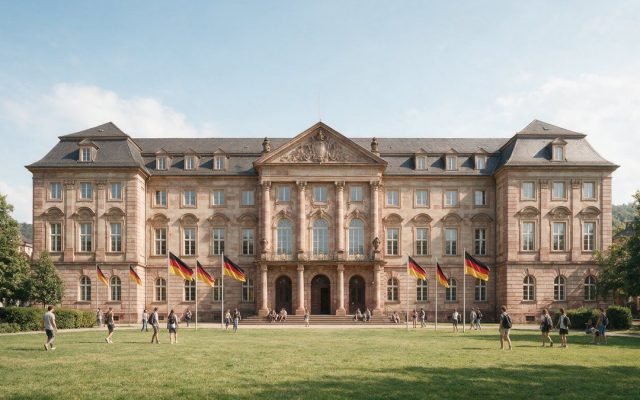
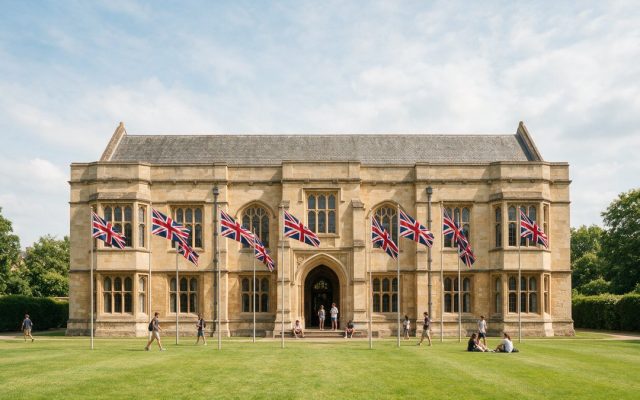
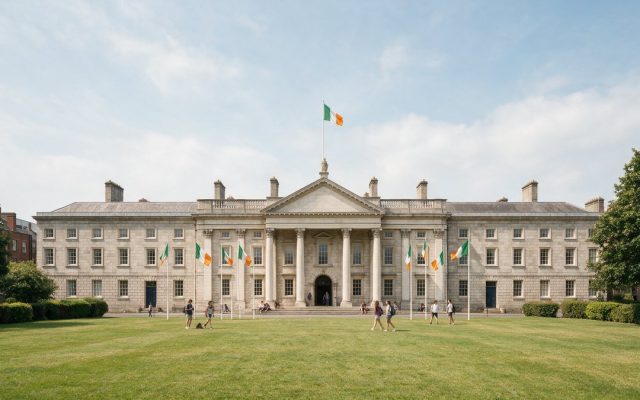
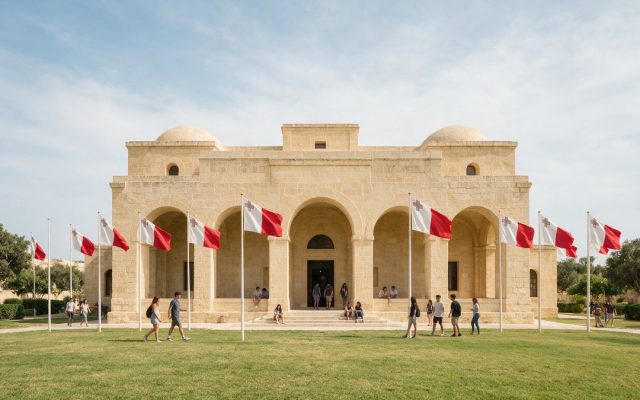
Not sure? Compare
Frequently asked questions
There is no single best; it depends on budget and language. Germany is cheapest on tuition at free and gives 18 months to find work. Ireland and Malta are the all-English options. Hungary and Poland combine low fees with English-taught medicine. Compare tuition, living costs, work rights and post-study stay together, not tuition alone.
Germany is the main route: public universities charge free tuition for bachelor's and consecutive master's degrees, leaving €100–400 per semester. Baden-Württemberg charges non-EU students separately, so confirm per university. Free tuition is not a free degree — you still block €11,904 per year and pay €850–1,200 per month to live.
Tuition runs from free in Germany and €200–4,200 per year in Italy, through €2,000–6,500 per year in Poland and €3,000–8,000 per year in Hungary, to €9,850–27,000 per year in Ireland and £11,400–38,000 per year in the UK. Living costs run €500–600 per month to €1,200–1,800 per month.
Ireland and Malta teach almost everything in English. Hungary and Poland run large English-taught catalogues including medicine, and Cyprus teaches in English at its private universities and at master's level. Germany, France, Spain, Italy and Austria concentrate English-taught study at master's level, with bachelor's teaching mainly in the national language.
Often, but not always, and nationality alone does not waive it. Published floors run from IELTS 5.5 in Cyprus, Hungary, Poland and Spain to 6 in Germany, Ireland, Malta and Italy. Many universities accept English-taught school grades or a Medium of Instruction letter instead, but each decides for itself and visa rules are assessed separately.
It varies by country and is usually the hardest part. Germany requires €11,904 per year in a blocked account, Italy €10,179.85 per year, Ireland €10,000 per year, Poland PLN 17,650 and Spain €600 per month. Hungary and Türkiye publish no fixed amount, assessing bank statements or a sponsor instead.
Now, if France, the UK or Italy is on your list. The French DAP platform closes 15 December 2026 and the UK's main UCAS deadline falls on 13 January 2027. Italy is the tightest: University-set pre-enrolment deadline via Universitaly, generally by ~30 September (April-June instead for entrance-exam courses e.g. Medicine, Architecture); visa application to the consulate no later than 30 November — binding, per MUR procedure confirmed valid for both the 2026/27 and 2027/28 cycles.
There is usually a route, just a longer one. If your certificate is short of a German bachelor's, a Studienkolleg or foundation year fixes it. If your English test falls short, Cyprus, Hungary, Poland and Spain sit at IELTS 5.5. If the money is the problem, Hungary at €500–600 per month or a fully funded scholarship is the realistic path.